JavaScript Tutorials - Herong's Tutorial Examples - 2.33, by Herong Yang
Web Scripting Architecture Overview
This section provides an overview of a typical Web scripting processing flow architecture showing server-side and client-side scripting steps.
As we can see from previous chapters, JavaScript code can be used in three areas to help building Web sites or Web based applications:
- Server-Side Scripting - Scripts embedded in HTML documents to be processed by the Web server before sending to the client - Web browser. Server-side scripting usually used to interact with database or other backend applications and to bring dynamic data into HTML documents.
- Client-Side Scripting for Page Document Building - Scripts embedded in HTML documents to be processed by the Web browser before rendering the page document on the browser window.
- Client-Side Scripting for Browser Event Handling - Scripts embedded in HTML documents to be processed by the Web browser when user interacts with the Web browser window.
The diagram below shows you how server-side scripting and client-side scripting can be used together performing different functions in a typical Web application process flow architecture:
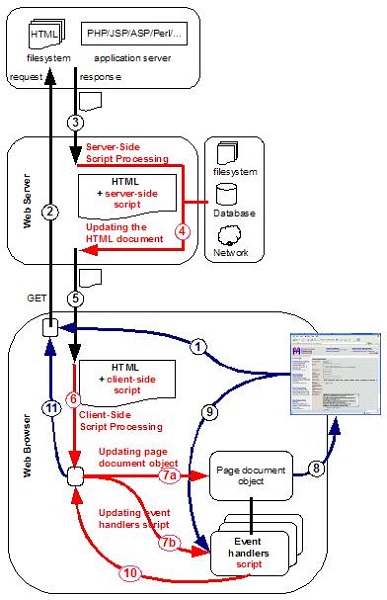
Red lines used in this diagram indicate where JavaScript could be used. Different sections of this Web scripting flow architecture diagram will be explained later.
Table of Contents
ECMAScript Language Specification and JavaScript Dialects
Data Types, Variables and Expressions
Creating, Accessing, and Manipulating Arrays
Defining and Calling Functions
Web Browser Supporting JavaScript
►Server-Side and Client-Side Web Scripting
►Web Scripting Architecture Overview
Server-Side Scripting Overview
Client-Side Scripts for Document Updating
Client-Side Scripts for Event Handling
Client-Side Scripting Processed Multiple Times
New Script Resulted from Two Original Scripts
Defining Your Own Object Types
Inheritance of Properties and Methods through the Prototype Object Chain
'jrunscript' - JavaScript Shell Command from JDK
Using Functions as "Function" Objects
Introduction to Built-in Object Types
W3C's Document Object Model (DOM) Specifications